

Baroque Period
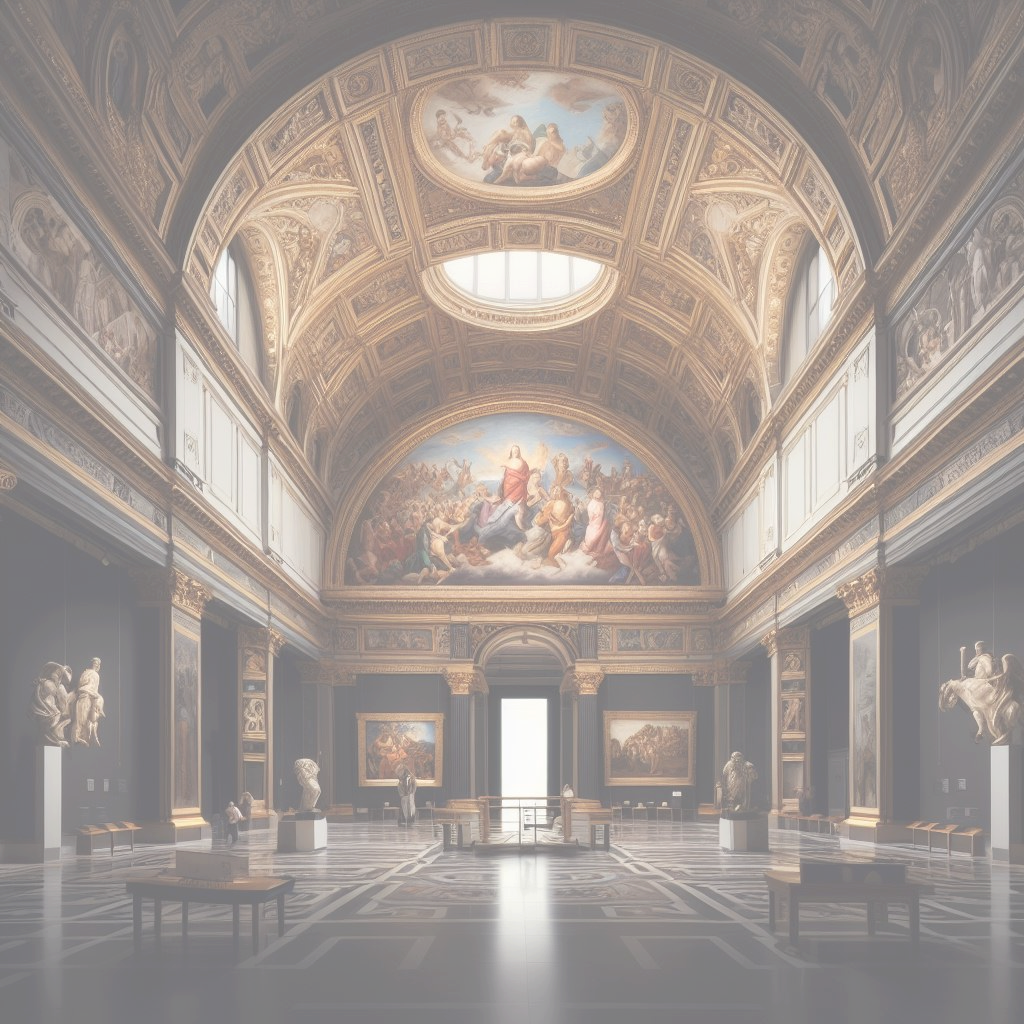
The Baroque era in the arts began in Italy in the 17th century and continued to be prosperous in other parts of the world well into the 18th. It included decorative arts, music, architecture, painting, and sculpture. Between the beginning of the seventeenth and the middle of the eighteenth centuries, Europe saw a cultural and artistic movement known as the baroque. Baroque places an emphasis on exaggerated, dramatic motion and transparent, easily understood detail. The majority of Europe adopted the style once it emerged in Rome, Italy, circa 1600.

bernini%20baroque.jpeg)
Famous Artworks

The Rape of Proserpina
(1616)

Equestrian statue of Louis XIV
(1677)

The Vision of Constantine
(1670)
Gian Lorenzo Bernini
Gian Lorenzo, he worked with materials like glass, clay, wax, bronze, wood, stucco, stone, and bronze. He had a number of aides, with four possibly being the average. Although most of his best-known works are circular statues, he also produced a significant number of architectural reliefs for pulpits, altars, and tombs as well as Madonna and Child paintings for private homes. He also invented a new, very shallow form of bas-relief for small works.
His style can be divided into broad, overlapping phases, starting with the development of expressiveness and classical monumentality in statues, and progressing to the development of energy and charm, primarily in smaller pieces. He began by departing from the Lorenzo Ghiberti-taught International Gothic style with classically infused works and then adopted a more modern aesthetic.
Michelangelo Merisi da Caravaggio
Caravaggio, also known as Michelangelo Merisi (Michele Angelo Merigi or Amerighi) da Caravaggio, was an Italian painter who spent the majority of his working life in Rome. He divided his time between Naples, Malta, and Sicily over the last four years of his life before passing away. Art critics have described his works as blending a realistic study of the physical and emotional state of the human being with a dramatic use of lighting, which had a fundamental impact on Baroque painting.
Close physical observation and dramatic chiaroscuro, or "tenebrism," were techniques used by Caravaggio. He turned the method into a key stylistic component, engulfing his objects in vivid shafts of light and deepening shadows. Caravaggio clearly depicted significant events and situations, frequently including brutal combat, torture, and death. He preferred to forego sketching and move directly into the canvas while working quickly with live figures. He had a significant influence on the emerging Baroque style that arose from Mannerism. His influence can be seen both directly and indirectly in the works of Rembrandt, Gian Lorenzo Bernini, Peter Paul Rubens, and Jusepe de Ribera. The "Caravaggisti" (or "Caravagesques"), as well as tenebrists or tenebrosi ("shadowists"), were names for artists who were greatly influenced by him.


Famous Artworks
The Vision of Constantine
(1670)

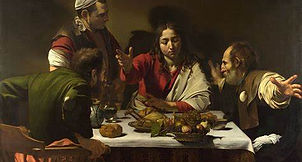
The Supper at Emmaus
(1601)
David with the head of Goliath
(1600)


Famous Artworks
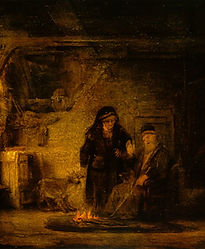
Tobit and Anna
(1645)
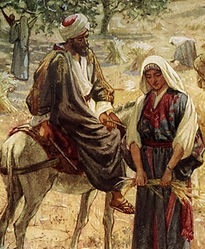
Boaz
(1643)

The Holy Family
(1632)
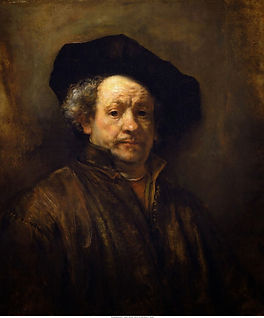
Rembrandt van Rijn
Rembrandt Harmenszoon van Rijn, most often known by his stage name Rembrandt, was a Dutch Golden Age painter, printmaker, and draughtsman who lived from July 15, 1606, to October 4, 1669. He is widely regarded as one of the finest visual painters in the history of art. An inventive and prolific master in three mediums, Rembrandt is said to have produced a total of roughly three hundred paintings, three hundred etchings, and two thousand drawings.
Rembrandt's works cover a wide range of subjects and techniques, including portraits and self-portraits, landscapes, genre scenes, allegorical and historical scenes, biblical and mythical themes, and animal studies, in contrast to the majority of Dutch painters of the 17th century. His contributions to art were made during the Dutch Golden Age, a time of immense prosperity, cultural advancement, and scientific advancement, when Dutch art—especially Dutch painting—was prolific and forward-thinking.
Artemisia Gentileschi
Artemisia Lomi, often known as Artemisia Gentileschi, was an Italian Baroque painter. Gentileschi, who first created in the Caravaggio style, is regarded as one of the most accomplished painters of the seventeenth century. By the age of 15, she began producing professionally. Gentileschi was the first woman to join Florence's Accademia di Arte del Disegno and had a global clientele during a time when women had little options to pursue artistic education or work as professional painters.
Many of Gentileschi's paintings feature women from myths, allegories, and the Bible, including victims, suicides, and warriors. Some of her best-known subjects are Susanna and the Elders (particularly the 1610 version in Pommersfelden), Judith Slaying Holofernes (her 1614–1620 version is in the Uffizi gallery), and Judith and Her Maidservant (her version of 1625 is in the Detroit Institute of Arts).

Famous Artworks

Adoration of the Magi
(1636)

Bathsheba
(1637)
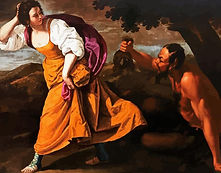
Corisca and the Satyr
(1630)

Famous Artworks

Portrait of Philip Herbert, 4th Earl of Pembroke
(1634)

Portrait of Marie-Louise de Tassis
(1629)

The Magistrates of Brussels
(1634)
Anthony van Dyck
Anthony van Dyck worked in London for some months in 1621, then returned to Flanders for a brief time, before travelling to Italy, where he stayed until 1627, mostly in Genoa. In the late 1620s he completed his greatly admired Iconography series of portrait etchings, mostly of other artists. He spent five years in Flanders after his return from Italy, and from 1630 was court painter for the Archduchess Isabella, Habsburg Governor of Flanders. In 1632, he returned to London to be the main court painter, at the request of Charles I of England.
With the exception of Holbein, van Dyck and his contemporary Diego Velázquez were the first painters of pre-eminent talent to work mainly as court portraitists, revolutionizing the genre. He is best known for his portraits of the aristocracy, most notably Charles I, and his family and associates. Van Dyck became the dominant influence on English portrait-painting for the next 150 years. He also painted mythological and biblical subjects, including altarpieces, displayed outstanding facility as a draughtsman, and was an important innovator in watercolour and etching.