

Renaissance Period
The 14th to the 16th centuries were known as the Renaissance in European history. It was distinguished by a resurgence of interest in classical education, a shift toward a more individualistic conception of man, and a rise in ecological consciousness. Many masterpieces of painting, sculpture, and architecture were made during the Renaissance, a time of immense artistic and cultural achievement. The most well-known Renaissance artists include Raphael, Michelangelo, and Leonardo da Vinci. The realism, focus on detail, and use of perspective that characterize Renaissance art are well known.


Famous Artworks


Mona Lisa
(1503)
Madonna of the Carnation
(1475)
Salvator Mundi
(1490)
Leonardo da Vinci
Leonardo da Vinci, probably the most important Renaissance artist, is widely recognized as the most famous artist of all time. He’s the genius behind the iconic Mona Lisa painting masterpiece, after all. It was painted sometime between 1503 and 1519 when Leonardo was living in Florence, and it now hangs in the Louvre Museum, in Paris, where it remained an object of pilgrimage in the 21st century. The sitter’s mysterious smile and her unproven identity have made the painting a source of ongoing investigation and fascination. Da Vinci also created a background with aerial views and a beautiful landscape but muted from the vibrant lightness of the subject’s face and hands. The technique Da Vinci used in executing the painting left behind no visible brush marks, something that was said to make any master painter lose heart. It is truly a masterpiece.
The Mona Lisa is an oil painting, with a cottonwood panel as the surface. It is unusual in that most paintings are commissioned as oil on canvas, but the cottonwood panel is part of what has attributed to the fame of the painting. Because of the medium used for the image, the Mona Lisa has survived for six centuries without ever having been restored–a trait very unusual when considering the time period of the piece.
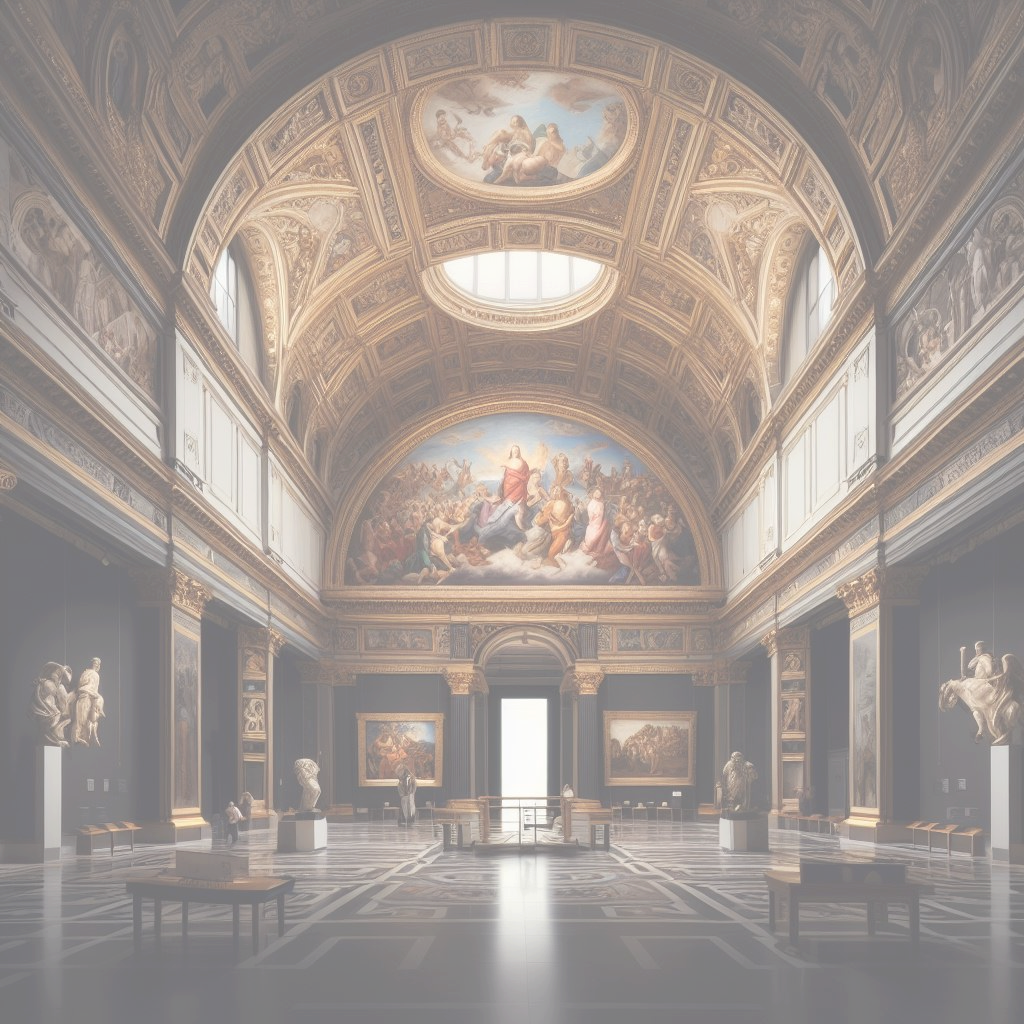
Michaelangelo di Lodovico Buonarroti Simoni
Michelangelo di Lodovico Buonarroti Simoni, was an Italian sculptor, painter, architect, and poet of the High Renaissance. Born in the Republic of Florence, his work was inspired by models from classical antiquity and had a lasting influence on Western art. Michelangelo's creative abilities and mastery in a range of artistic arenas define him as an archetypal Renaissance man, along with his rival and elder contemporary, Leonardo da Vinci.
Given the sheer volume of surviving correspondence, sketches, and reminiscences, Michelangelo is one of the best-documented artists of the 16th century. He was lauded by contemporary biographers as the most accomplished artist of his era.
Michelangelo achieved fame early; two of his best-known works, the Pietà and David, were sculpted before the age of thirty. Although he did not consider himself a painter, Michelangelo created two of the most influential frescoes in the history of Western art: the scenes from Genesis on the ceiling of the Sistine Chapel in Rome, and The Last Judgment on its altar wall. His design of the Laurentian Library pioneered Mannerist architecture. At the age of 71, he succeeded Antonio da Sangallo the Younger as the architect of St. Peter's Basilica. Michelangelo transformed the plan so that the western end was finished to his design, as was the dome, with some modification, after his death.


Famous Artworks

Sistine Chapel
(1473)

Pietà
(1499)

The Creation of Adam
(1511)


Famous Artworks

Madonna of the Apple
(1400)

San Rossore Reliquary
(1425)

Madonna and the Child
(1440)
Donato di Niccolò di Betto Bardi
Donato di Niccolò di Betto Bardi, commonly known as Donatello, was an Italian sculptor of the Renaissance period. He was born in Florence in 1386 and died there in 1466. Donatello was a master of sculpture in both marble and bronze, and one of the greatest of all Italian Renaissance artists. He had a more detailed and wide-ranging knowledge of ancient sculpture than any other artist of his day. His work was inspired by ancient visual examples, which he often daringly transformed.
He worked with materials like glass, clay, wax, bronze, wood, stucco, stone, and bronze. He had a number of aides, with four possibly being the average. Although most of his best-known works are circular statues, he also produced a significant number of architectural reliefs for pulpits, altars, and tombs as well as Madonna and Child paintings for private homes. He also invented a new, very shallow form of bas-relief for small works.
His style can be divided into broad, overlapping phases, starting with the development of expressiveness and classical monumentality in statues, and progressing to the development of energy and charm, primarily in smaller pieces. He began by departing from the Lorenzo Ghiberti-taught International Gothic style with classically infused works and then adopted a more modern aesthetic.
Raffaello Sanzio da Urbino
Raffaello Sanzio da Urbino was an Italian painter and architect of the High Renaissance. His work is admired for its clarity of form, ease of composition, and visual achievement of the Neoplatonic ideal of human grandeur. Together with Leonardo da Vinci and Michelangelo, he forms the traditional trinity of great masters of that period.
His father was court painter to the ruler of the small but highly cultured city of Urbino. He died when Raphael was eleven, and Raphael seems to have played a role in managing the family workshop from this point. He trained in the workshop of Perugino and was described as a fully trained "master" by 1500. He worked in or for several cities in north Italy until in 1508 he moved to Rome at the invitation of Pope Julius II, to work on the Apostolic Palace at the Vatican. He was given a series of important commissions there and elsewhere in the city and began to work as an architect. He was still at the height of his powers at his death in 1520.
Raphael was enormously productive, running an unusually large workshop and, despite his early death at 37, leaving a large body of work. His career falls naturally into three phases and three styles, first described by Giorgio Vasari: his early years in Umbria, then a period of about four years (1504–1508) absorbing the artistic traditions of Florence, followed by his last hectic and triumphant twelve years in Rome, working for two popes and their close associates. Many of his works are found in the Vatican Palace, where the frescoed Raphael Rooms were the central, and the largest, work of his career. The best-known work is The School of Athens in the Vatican Stanza della Segnatura. After his early years in Rome, much of his work was executed by his workshop from his drawings, with considerable loss of quality. He was extremely influential in his lifetime, though outside Rome his work was mostly known from his collaborative printmaking.

Famous Artworks

Madonna with the Blue Diadem
(1515)
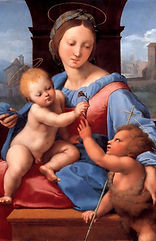
Terranuova Madonna
(1505)
-large%202.jpg)
Oddi Altarpiece
(1502)

Famous Artworks

Juda's Betrayal
(1306)

Lamentation
(1305)

Ascension
(1303)
Giotto di Bondone
Giotto di Bondone, also known as Giotto and Latinized as Giottus, was an Italian painter and architect from Florence in the Late Middle Ages. His Italian name is [dtto di bondone]; he lived from approximately 1267 to January 8, 1337. Giorgio Villani, a banker and historian, described Giotto as "the most sovereign master of painting in his time, who drew all his figures and their postures according to nature," and of his publicly acknowledged "talent and excellence." Giorgio Vasari said that Giotto made a clear break from the predominate Byzantine style and that he started "the great art of painting as we know it."
The Scrovegni Chapel in Padua, commonly known as the Arena Chapel, was decorated by Giotto and was finished about 1305. One of the few things we do know about Giotto's life is that he painted the Arena Chapel and was chosen by the Florentine Commune to design the new campanile (bell tower) of the Florence Cathedral in 1334. His age, place of birth, appearance, apprenticeship, the order in which he produced his works, and whether or not he actually painted the famous paintings in the Upper Basilica are all up for debate.